
Tooth loss remains a significant oral health concern worldwide. According to the World Health Organization, severe periodontal disease is estimated to affect more than 1 billion cases worldwide, often leading to tooth loss. In the United States, the American College of Prosthodontists reports that over 36 million Americans have no natural teeth, and 120 million are missing at least one tooth. Modern dental implants have transformed restorative dentistry by replicating not only the appearance of teeth but also their biological function.
Unlike removable prosthetics, dental implants are anchored into the jawbone, functioning in a way that closely mirrors a natural tooth root. This biological integration provides structural stability, preserves bone density, and restores chewing efficiency. For patients considering replacing missing teeth, understanding the science behind implants can support informed decision-making.
The Biological Structure of a Natural Tooth
A natural tooth consists of two major components:
- The crown, visible above the gumline
- The root, embedded within the jawbone
The root anchors the tooth securely and transmits chewing forces into the surrounding bone. This mechanical stimulation maintains bone density through continuous remodeling. When a tooth is lost, that stimulation ceases.
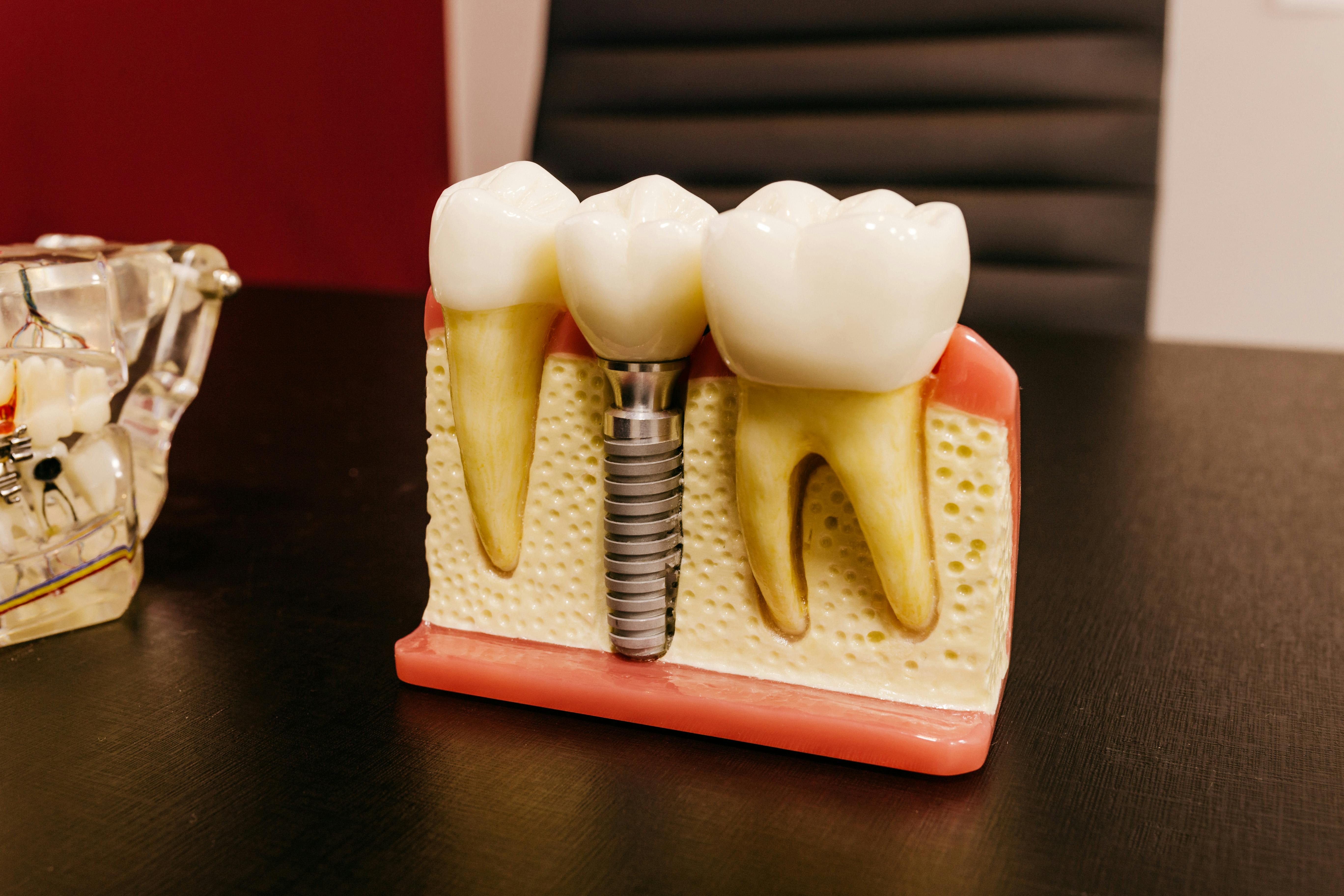
This is why traditional dentures may not prevent long-term bone loss. In contrast, dental implants replace the missing root structure. At practices offering dental implants, the implant fixture is designed to function as a synthetic tooth root, restoring load distribution and bone stimulation similar to a natural tooth.
Osseointegration: The Science Behind Implant Stability
The defining biological process behind dental implants is osseointegration. This term describes the direct structural and functional connection between living bone and the titanium implant surface.
How Osseointegration Works
- A titanium post is surgically placed into the jawbone.
- Over three to six months, bone cells grow and attach directly to the implant surface.
- The implant becomes firmly anchored, comparable to a natural tooth root.
Titanium is widely used because of its biocompatibility and high success rate. Long-term studies show implant survival rates of approximately 95% over ten years in healthy patients. This predictable biological integration allows implants to support crowns, bridges, or dentures with stability similar to natural dentition.
Clinics providing restorative dentistry and crowns and bridges often use this approach to rehabilitate both single and multiple missing teeth. The stability achieved through osseointegration allows patients to chew with near-normal force compared to removable alternatives.
Functional Benefits That Mirror Natural Teeth
Once integrated, dental implants restore more than appearance. They replicate the biomechanics of a natural tooth.
Structural and Functional Advantages
- Preservation of jawbone density
- Prevention of shifting adjacent teeth
- Restoration of bite force and chewing efficiency
- Support for clear speech
Patients receiving treatment at a dental clinic frequently combine implant therapy with other services such as periodontal services Bethesda, deep teeth cleaning, or tooth extractions when preparing the site for placement.
For individuals who grind their teeth, consultation with a night guard dentist in Bethesda may also be recommended after implant restoration to protect both implants and natural teeth.
Comprehensive Care Surrounding Implant Treatment
Successful dental implants require careful clinical assessment before and after placement. A qualified dentist evaluates bone density, periodontal health, occlusion, and systemic risk factors before surgery. Diagnostic imaging, including cone-beam computed tomography (CBCT), is often used to assess bone volume and anatomical structures.
Pre-treatment may involve:
- Management of periodontal disease
- Site preparation following extractions
- Stabilization of bite alignment
- Control of bruxism is present
Post-placement care is equally important. Regular hygiene appointments and monitoring help maintain peri-implant tissue health and reduce the risk of peri-implantitis. Long-term studies indicate that implant survival significantly improves when patients maintain consistent professional maintenance and oral hygiene practices.
When performed within a structured treatment plan, dental implants integrate predictably and provide sustained biological and functional outcomes comparable to natural teeth.
Long-Term Stability and Oral Health Outcomes
Scientific evidence supports the long-term reliability of dental implants. Studies indicate that implants maintain high survival rates when combined with consistent oral hygiene and professional monitoring.
When maintained properly, implants:
- Do not decay like natural teeth
- Maintain surrounding bone levels
- Provide decades of functional service
Patients undergoing orthodontic correction with an Invisalign dentist may also incorporate implant placement as part of a comprehensive treatment plan. The multidisciplinary approach used in modern restorative dentistry ensures biological compatibility, structural stability, and aesthetic results.

Restoring Biology and Function with Dental Implants
Dental implants represent one of the most scientifically validated solutions in modern dentistry. Through osseointegration, titanium posts fuse with the jawbone, replicating the biological function of natural tooth roots. This integration preserves bone density, restores bite strength, and provides long-term structural support.
At Bethesda Dental Health, our team of experienced professionals provides comprehensive implant treatment supported by advanced diagnostics and coordinated care. Whether you are considering dental implants or seeking guidance from a trusted dentist, we are committed to delivering research-driven, patient-centered solutions.
Contact us now and schedule your consultation and take the next step toward restoring stability, comfort, and confidence in your smile.